Planting design for Lincoln's climate: heat, wind, cold and clay
A student's working guide to designing plantings that survive eastern Nebraska — reading hardiness and heat, planning for wind and freeze-thaw, working with heavy soils and choosing plants by community rather than by catalog photo.

By Matthew Bovee · Upd. · 9 min
The first planting plan I drew in studio looked great on paper. It had a tidy palette of flowering perennials, a few small ornamental trees and a neat ribbon of groundcover along a walk. My instructor asked one question during review: "Which of these plants have you seen alive in Lincoln in August?" I had seen maybe two of them. The rest came from photographs taken somewhere with a gentler climate.
That question changed how I approach planting design. Eastern Nebraska asks a lot of a plant. Summers are hot and often dry for weeks at a time. Winters can swing from mild to brutally cold within days. Wind is close to constant on open sites. Many soils around Lincoln are heavy and slow to drain, and urban sites add compaction, reflected heat and road salt on top of all that. A plan that ignores those conditions is not a design. It is a wish.
This article is the checklist I wish I had before that first review. It is written for other students and for anyone in Lincoln trying to understand why some plantings thrive here and others quietly disappear by their third summer.
Start with the conditions, not the palette
Most planting mistakes start with choosing plants first and then hoping the site will cooperate. A better habit is to describe the site in plain language before you open a plant list. I write a short paragraph for every planting area that answers four questions.
- How much sun does it get, and when? Six hours of afternoon sun on the west side of a building is a very different condition from six hours of morning sun on the east.
- Where does water go? Does the area collect runoff, shed it, or sit under a roof overhang that keeps it dry?
- What does the wind do here? Open corners, parking lots and gaps between buildings funnel wind and dry plants out quickly.
- What happens in winter? Is snow piled here? Does it get salt spray from a road or walk? Is it shaded all day once the sun is low?
Only after those answers are written down do I start picking plants. The paragraph becomes a filter. A plant that wants even moisture does not belong in a hot, windy strip next to a parking lot, no matter how good it looks in the catalog.
Hardiness is a floor, not a guarantee
Lincoln sits roughly at the boundary between USDA hardiness zones 5b and 6a. That number tells you the average coldest winter temperature, which is useful as a minimum test. If a plant is not reliably hardy to this zone, it is out.
But hardiness maps say nothing about summer heat, drought, humidity or soil, and in eastern Nebraska those are usually what kill plants. A shrub rated for much colder zones can still fail here because it hates hot, dry summers. I treat the zone rating as the first gate, then ask the harder questions.
Heat and drought: design for the bad summer
Every few years there is a summer that tests every planting in town. Designing for an average year means designing for failure in the hard year. When I select plants I assume a stretch of weeks with little rain and high heat, and I ask which plants would still look acceptable at the end of it.
That pushes plans toward plants with deep roots and tough foliage: many native grasses, prairie forbs and drought-adapted shrubs. It also changes how plants are arranged. Plants with similar water needs should be grouped together so they can be managed together, a practice usually called hydrozoning. Mixing a thirsty plant into a bed of drought-tolerant ones means either overwatering the whole bed or losing the thirsty one.
| Zone | Typical location | What belongs there |
|---|---|---|
| Low water | Open, sunny, well-drained areas away from buildings | Prairie grasses and forbs, tough shrubs, established trees |
| Moderate | Near entries and walks where people look closely | Mixed perennials, some flowering shrubs, small trees |
| Higher | Small, high-visibility areas or places that collect runoff | Plants that tolerate wet periods, rain garden plantings |
The point is not to ban every plant that needs water. It is to put water where it does the most good, and to make that choice on purpose.
Wind: the condition students forget
Wind is easy to ignore in a studio drawing because it does not show up on a plan. On a real site in Lincoln it is often the deciding factor. Wind dries soil and leaves, breaks stems, scatters mulch and makes outdoor spaces uncomfortable for people for much of the year.
In planting design, wind affects three things:
- Plant selection. Open, windy sites favor plants with flexible stems and narrow leaves. Grasses handle wind well. Large, soft leaves shred.
- Structure. Tall perennials that flop in rich garden soil often stand better in leaner soil with neighbors to lean on. Dense, layered plantings support each other.
- Shelter. Shrub masses, hedges and tree groves can slow wind for the plants and people behind them. In my projects I try to place sheltering plantings on the side of a space that faces the prevailing winds for that season.
When I visit a site now I bring a notebook page just for wind: which corners are gusty, where snow drifts, where leaves pile up. Those patterns tell you where the air moves.
Cold, freeze-thaw and winter interest
Nebraska winters are not only cold. They swing. A warm spell can pull plants out of dormancy, and a hard freeze afterward can damage them. Bare soil heaves as it freezes and thaws, which can push young plants out of the ground. Mulch and dense planting help keep soil temperatures steadier.
Winter also lasts long enough that it deserves design attention. A planting that is just bare soil and cut stalks from November to April is a poor use of space. Grasses, seed heads, evergreen structure and plants with interesting bark carry a landscape through the months when people still walk past it every day. I explore this more in designing outdoor spaces for Nebraska winters.
Soil: work with clay, not against it
Many sites around Lincoln have soils with a lot of clay, and urban sites are often compacted from construction. Clay is not the enemy. It holds nutrients and water well. The problems are slow drainage and compaction, which suffocate roots.
What I have learned so far:
- Test before you assume. A simple soil test and a drainage test (dig a hole, fill it with water, time how long it takes to drain) tell you more than any assumption.
- Choose plants that tolerate clay. Many prairie natives evolved in heavy soils and do well in them once established.
- Avoid "fixing" clay with sand. Mixing small amounts of sand into clay can make it worse. Organic matter and roots improve structure over time.
- Relieve compaction where it matters. On construction sites, the specification for soil preparation is as important as the plant list.
Choose communities, not individual plants
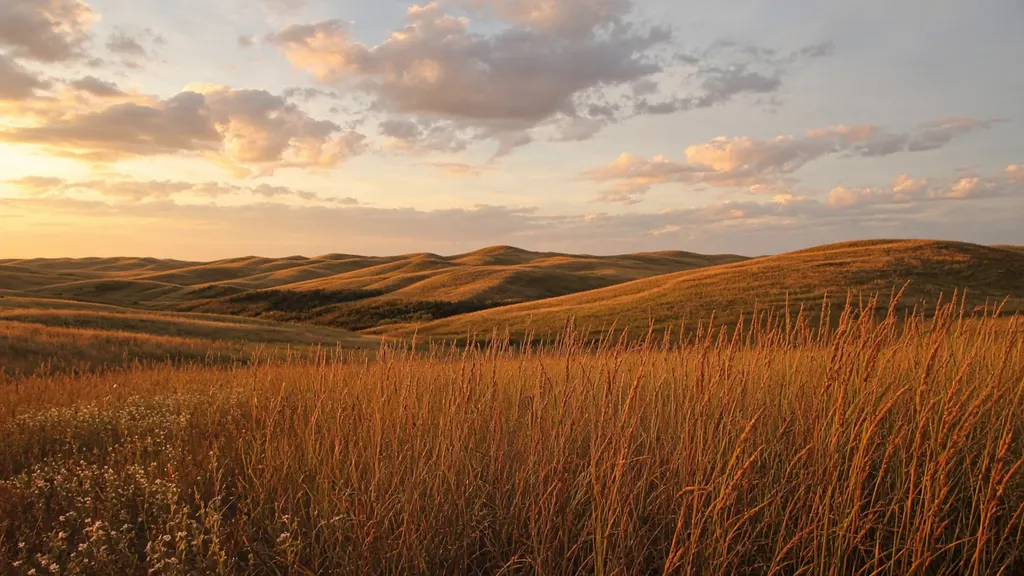
The biggest shift in my thinking came from studying native plant communities, especially tallgrass prairie. In a prairie, plants grow in layers: grasses form a matrix, flowering forbs rise through it, and low plants cover the ground. Every niche is filled, which leaves little room for weeds and means the planting supports itself.
Designing with that idea — sometimes called community-based or matrix planting — produces plantings that look full, handle stress well and need less maintenance once established. I wrote a longer piece on using tallgrass prairie as a design reference, and it shaped most of my studio projects.
A plant list is a set of individuals. A planting plan should be a community.
Urban stress: salt, heat islands and tight spaces
Streetscapes and parking lots are the hardest places to grow anything in Lincoln. Pavement reflects heat, soil volumes are tiny, snow is piled on top of plants and de-icing salt splashes or washes into beds.
A few principles I keep in mind for these spaces:
- Give trees enough soil. A tree in a small pit will struggle. Connected soil volumes under pavement, when budgets allow, make a large difference over a tree's life.
- Leave a buffer at the curb. The first strip next to a road or walk takes the worst salt and snow. Use the toughest plants there, or a gravel or mulch edge.
- Plan for snow storage. Snow has to go somewhere. If the design does not choose where, plows will choose for you.
Reading a planting through the year
One habit that has improved my planting plans more than any reference book is revisiting the same plantings in every season. A bed that looks full and colorful in July can be bare in March, flattened by snow in January or patchy in a dry August. Watching that cycle shows which plants carry structure, which ones collapse and which ones quietly spread.
When I revisit a planting I note the date, the weather of the past few weeks and a quick description of each layer: the grasses, the flowering forbs, the ground layer and any gaps. I photograph from the same spots each time so changes are easy to compare. After a year, that record is more useful than any list of "recommended plants", because it is tied to real conditions in Lincoln.
Some patterns that have shown up in my own notes:
- Late summer is the real test. Plants that look tired in a dry August on heavy soil tell you more about suitability than plants that look good in June.
- Gaps fill with something. Bare soil rarely stays bare. Designing full coverage from the start reduces weeding later.
- Edges carry the impression. A neat border makes even a loose, naturalistic planting read as intentional to people passing by.
- Snow is a design partner. Standing grasses catch snow and look striking; flopping perennials disappear.
Maintenance is part of the design
Planting plans often stop at the plant list, but every planting comes with a maintenance regime, whether it is designed or not. For climate-adapted plantings the regime is usually lighter than for conventional beds, but it is different: a single cutback in late winter rather than many small tidy-ups, occasional editing of aggressive spreaders, and patience during establishment.
I try to write a short maintenance note alongside each planting plan: when to water during establishment, when and how to cut back, what to expect in years one, two and three, and which plants to watch. It makes the design more realistic, and it gives the people who will care for the planting a fair chance of keeping it looking the way it was intended.
A checklist before you finalize a plan
- Every planting area has a written description of sun, water, wind and winter conditions.
- Every plant is hardy to the site's zone and has been seen thriving locally, or is marked "unproven."
- Plants are grouped by water needs.
- Windy edges use plants that tolerate wind, and shelter is placed where it helps.
- There is winter structure: grasses, seed heads, evergreens or bark.
- Soil preparation is specified, not assumed.
- Snow storage and salt exposure are accounted for near pavement.
- The planting reads as a community, with layers that cover the ground.
Where to keep learning
None of this is advanced. It is the foundation that makes advanced design possible. The best teachers I have found are not books but places: walk local parks, campus landscapes and older neighborhoods in every season and notice what is thriving and what is struggling. Take photos in August and again in February. That record will teach you more about planting in Lincoln than any catalog.
If you are a student starting your own planting plans, I would love to compare notes — the contact page is the best way to reach me. And if you want to see how these ideas show up in actual design work, the projects page walks through several studio case studies.
Last updated
Keep reading
Keep reading
7 min
Plants & climate
Tallgrass prairie as a design reference: what Nebraska's native landscapes teach designersHow the structure of tallgrass prairie — layers, matrix grasses, seasonal succession and deep roots — translates into planting design for campuses, parks and streets in eastern Nebraska.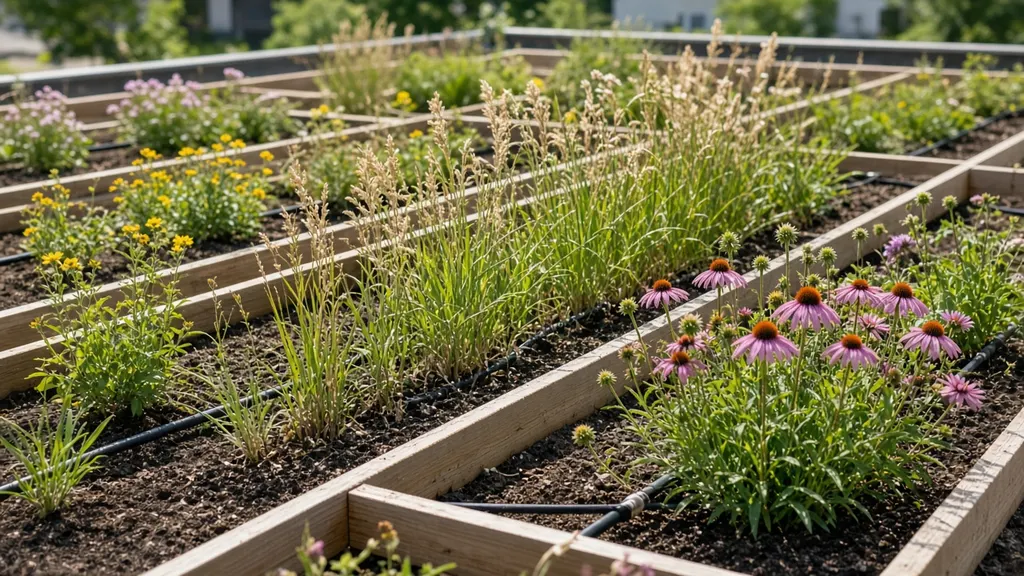
7 min
Public space
Designing public space for Nebraska wintersHow to design plazas, streets and small parks in Lincoln that stay useful and attractive from November to March: sun, wind shelter, snow storage, materials, lighting, planting and programming for cold months.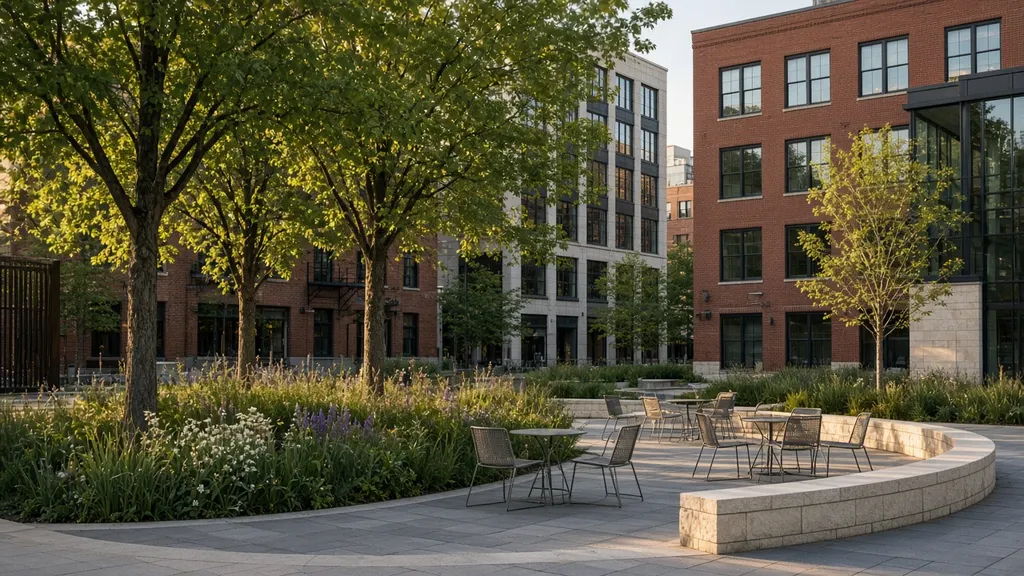
7 min
For students
Site analysis before you draw: how to read a site in LincolnA step-by-step approach to site analysis for landscape architecture students: what to observe, how to document sun, wind, water, soils, circulation and use, and how to turn notes into diagrams that shape a design.