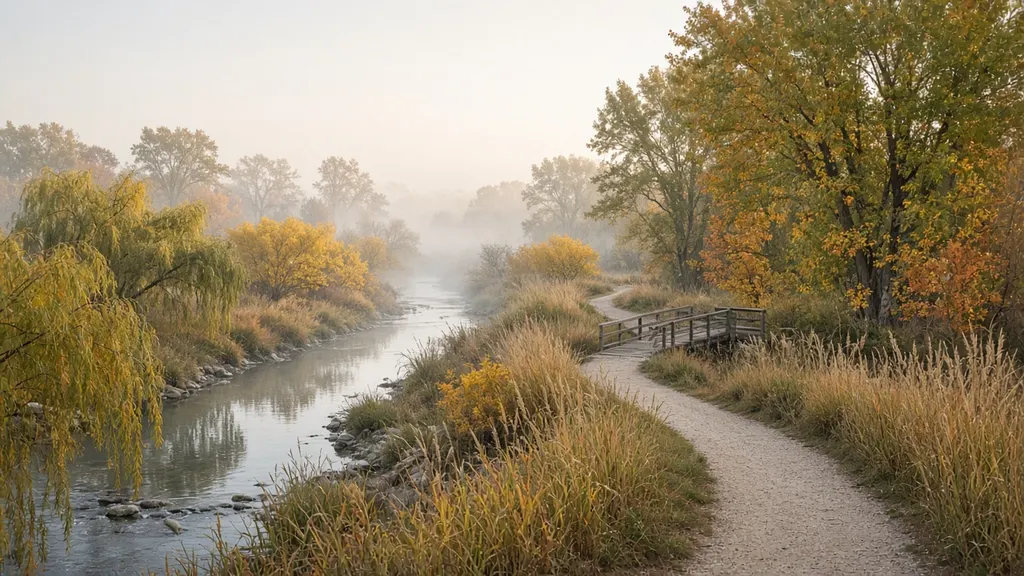
Designing public space for Nebraska winters
How to design plazas, streets and small parks in Lincoln that stay useful and attractive from November to March: sun, wind shelter, snow storage, materials, lighting, planting and programming for cold months.

By Matthew Bovee · Upd. · 7 min
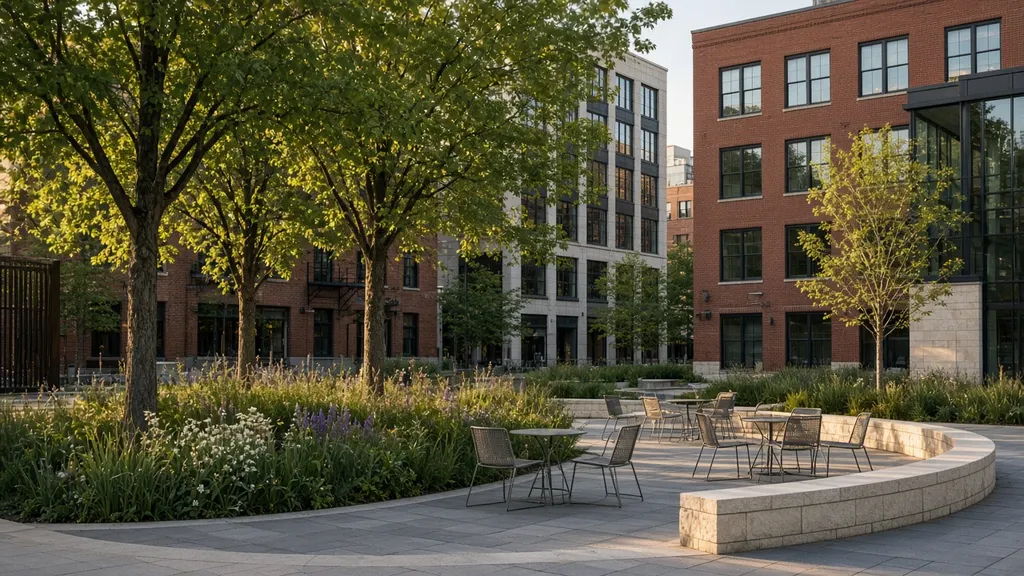
Most landscape architecture images show summer: green trees, people on benches, flowers in full color. In Lincoln, that is only part of the year. From roughly November through March, outdoor spaces deal with cold, wind, snow, ice, short days and low sun. A public space that only works in summer is only working for part of the year.
Designing for winter is not about making people sit outside in a blizzard. It is about making outdoor spaces comfortable on the many winter days that are cold but bright, making them safe to walk through, and making them good to look at even when nobody is using them. This article collects the principles I have been using in studio work on plazas and small public spaces.
Why winter design matters here
Winter in eastern Nebraska is long enough that it shapes daily life. People still walk to work, to class and to the bus. They still pass plazas and parks every day. Designing for winter improves:
- Safety, through better snow management, drainage and lighting.
- Comfort, through sun and wind shelter that extend the usable season on both ends.
- Appearance, through structure, color and texture that hold up in the cold months.
- Maintenance, because a design that anticipates snow and salt costs less to keep up.
Sun is the most valuable resource
On a cold, calm day, sitting in direct sun can feel dramatically warmer than sitting in shade. In winter the sun is low and casts long shadows, so a space that is sunny in June can be in shade all day in January.
In my site analysis I study winter sun carefully, as I describe in site analysis before you draw. The design implications:
- Put seating where the winter sun reaches, usually on the north side of an open space so that it faces south.
- Use deciduous trees on the south side of seating areas, so they give shade in summer and let sun through in winter.
- Avoid tall evergreens or structures that block winter sun from key spaces.
- Choose warm-feeling materials for seats — wood rather than metal or stone — where people sit in cold months.
Wind shelter makes or breaks a space
Wind is often the main reason people do not linger outside in winter. Open plazas between tall buildings can be especially uncomfortable. The goal is to slow and redirect wind around places where people sit and gather.
Strategies I use:
- Plant windbreaks of evergreen trees and shrubs on the side facing winter winds, usually north and northwest in this region.
- Use low walls, berms and planters to create sheltered pockets at seating height.
- Avoid wind tunnels between buildings by breaking up long, straight corridors.
- Shape spaces as rooms rather than open fields, so people can find shelter.
On a sunny day out of the wind, a bench in January can be pleasant. Put that same bench in the shade and the wind, and nobody will use it until May.
Snow has to go somewhere
Snow management is one of the most practical parts of winter design and one of the most often ignored. Plows and shovels push snow to the edges. If the design does not provide a place for it, snow ends up on plants, benches and drainage inlets.
| Issue | Design response |
|---|---|
| Where does plowed snow go? | Designate snow storage areas near paved edges, ideally lawn or tough planting |
| Salt damage | Use salt-tolerant plants near walks and roads; leave a gravel or mulch buffer |
| Meltwater refreezing | Grade paving to drain away from walks; avoid low spots in walking areas |
| Plow damage | Keep furnishings and plants back from plow paths; use durable edges |
| Drainage blocked by snow | Place inlets where snow will not be stored on top of them |
Snow storage areas can double as rain gardens or planted swales in summer, as long as the plants can handle salt and being buried. I explore those features in rain gardens and bioswales in Lincoln.
Materials for freeze-thaw
Repeated freezing and thawing is hard on materials. Water gets into cracks and pores, freezes, expands and breaks things apart.
What I consider:
- Paving should be rated for freeze-thaw and de-icing salt exposure. Permeable paving can reduce ice by letting meltwater drain through, but it needs the right base and maintenance.
- Joints and edges need careful detailing so water does not collect.
- Seating and railings should be comfortable to touch in cold weather; wood or coated surfaces are friendlier than bare metal.
- Slopes and steps need good drainage and, where possible, alternatives like ramps that are easier to clear.
Planting for winter interest
Winter does not have to mean empty beds. A planting designed with winter in mind can look good from November to March. I covered some of this in planting design for Lincoln's climate.
Elements that carry a planting through winter:
- Ornamental and native grasses, left standing until late winter, catch light and snow.
- Seed heads of prairie plants, which also feed birds.
- Evergreens for structure and color.
- Shrubs with colorful stems or interesting bark.
- Tree forms — branching patterns become visible when leaves drop.
Light for short days
In December the sun sets before many people finish work or class. Lighting becomes part of the everyday experience of public space for months.
- Light paths and entries for safety, with even, glare-free lighting.
- Use warmer color temperatures that feel welcoming and limit light pollution.
- Highlight trees, walls or art to give a space character after dark.
- Avoid over-lighting, which can make the surrounding area feel darker and affect wildlife.
Programming: give people a reason to come
Design can support winter use, but programming brings people out. Small public spaces can host seasonal markets, lighting events, temporary installations or simply serve as a sunny place to drink coffee on a bright afternoon. Designing flexible open areas, access to power and places for temporary structures makes this easier.
Thinking in shoulder seasons
Some of the biggest gains in winter design come not in the depths of January but in the shoulder seasons — late fall and early spring. A space that is sunny and sheltered can be comfortable for weeks longer on either end of the year than one that is shaded and windy. Over several months, those extra weeks add up to a lot of use.
When I evaluate a design, I imagine it on a few specific days:
- A bright, calm day in early March, when people are eager to be outside.
- A gray, windy day in November, when the space should be easy to walk through.
- The morning after a snowfall, when the priority is safe, clear paths.
- A dark evening in December, when lighting and visibility matter most.
If the design works on all four days, it is probably a good winter design.
Comfort at the scale of a single seat
Thermal comfort is very local. Two benches a few meters apart can feel completely different depending on sun, wind and what they are made of. That is why I find it useful to design winter comfort at the scale of individual seats rather than the whole space.
Questions I ask about each seating area:
- Does it get sun in winter, and for how many hours around midday?
- Is it sheltered from the prevailing winter wind at seated height?
- Is the surface comfortable to sit on when it is cold?
- Is there a backrest that blocks wind and reflects warmth?
- Will it be buried by plowed snow?
Answering these questions often produces small, specific changes — a bench turned toward the south, a planter moved a few meters, a material swapped — that make a large difference.
Accessibility in winter
Snow and ice affect people differently. Someone using a wheelchair, a walker or a stroller faces much bigger barriers from a ridge of plowed snow or an icy ramp than someone walking. Winter design should prioritize continuous, well-drained, easily cleared routes, with curb ramps and crossings kept clear of snow storage. Wider paths make clearing easier and leave room for snow at the edges without narrowing the walking surface.
Mistakes I have made
- Designing only for summer. My early plaza designs looked great in July renderings and offered nothing in January.
- Placing seats in permanent shade. A shaded bench is welcome in August and abandoned in winter.
- Forgetting snow storage. Plows piled snow on my imaginary perennials.
- Choosing metal seats with no thought for how cold they are to sit on.
A checklist for winter-ready public spaces
- Seating is placed where winter sun reaches.
- Wind shelter is provided on the side facing winter winds.
- Snow storage areas are designated and planted appropriately.
- Paving and materials are suited to freeze-thaw and salt.
- Drainage keeps meltwater off walking surfaces.
- The planting has winter structure and interest.
- Lighting supports safety and character without glare.
- The space can host seasonal activities.
Winter is not an obstacle to public space in Lincoln; it is a design condition, like slope or soil. One of my studio case studies focuses on a small plaza designed around these ideas. If you are working on something similar, reach out — I am always interested in how other students approach cold-climate design.
Last updated
Keep reading
Keep reading
7 min
For students
Site analysis before you draw: how to read a site in LincolnA step-by-step approach to site analysis for landscape architecture students: what to observe, how to document sun, wind, water, soils, circulation and use, and how to turn notes into diagrams that shape a design.
7 min
For students
How to build a landscape architecture student portfolio that shows how you thinkA practical guide for landscape architecture students: choosing projects, structuring case studies, showing process as well as finished drawings, writing captions, and keeping a portfolio honest and easy to read.7 min
Urban streams
Designing trails and edges along Lincoln's creeksHow landscape architects approach urban stream corridors in Lincoln: floodplains, stable banks, riparian planting, trail alignment, access to water and the long view of a creek as a shared public space.