Tallgrass prairie as a design reference: what Nebraska's native landscapes teach designers
How the structure of tallgrass prairie — layers, matrix grasses, seasonal succession and deep roots — translates into planting design for campuses, parks and streets in eastern Nebraska.

By Matthew Bovee · Upd. · 7 min
Eastern Nebraska was once largely tallgrass prairie. Very little of that original landscape remains, but its plants and patterns still shape what grows well here. For a landscape architecture student in Lincoln, prairie is not just a habitat to admire on a field trip. It is the most useful design reference we have.
That does not mean every project should look like a wild prairie. Most clients, and most city sidewalks, need something more orderly. But the logic of prairie — how it is layered, how it changes through the year, how it survives drought and fire — can guide plantings that look intentional and still behave like resilient plant communities. This article explains how I have been learning to translate that logic into design.
What makes prairie work
A healthy prairie is not a random mix of wildflowers. It has a structure that ecologists and designers describe in a few consistent ways.
- A grass matrix. Grasses make up much of the plant mass and form the background that everything else grows through.
- Seasonal layers. Some plants grow early in spring, others peak in midsummer and others flower late into fall. The community uses the growing season in shifts.
- Deep, diverse roots. Many prairie plants have root systems far larger than their visible parts, which helps them survive drought and stabilize soil.
- Full ground coverage. Low plants and the bases of taller plants cover the soil, leaving little space for weeds.
- Disturbance. Historically, fire and grazing reset the prairie. In designed landscapes, cutting back in late winter or early spring plays a similar role.
From ecosystem to design: the matrix approach
One of the clearest ways to borrow from prairie is matrix planting. Instead of arranging plants as separate blocks or drifts, a designer chooses a dominant groundcover layer — usually one or two grasses or sedges — and then scatters other plants through it.
I think of it in three layers:
- Structural plants: tall, upright plants that define the look of the planting, often placed singly or in small groups.
- Seasonal theme plants: the flowering perennials that give each season its character, repeated across the bed.
- Ground layer: the grasses, sedges and low plants that cover the soil and hold everything together.
| Prairie layer | Design role | What it does |
|---|---|---|
| Tall grasses and forbs | Structure | Height, form and winter presence |
| Midsummer and fall flowers | Seasonal theme | Color, pollinator value, change over time |
| Short grasses and sedges | Matrix / ground layer | Covers soil, limits weeds, ties the bed together |
The result is a planting that looks full and cohesive, and that can handle a bad summer better than a bed of individually spaced plants surrounded by mulch.
Designing for "cues to care"
The biggest risk with naturalistic plantings is that people read them as neglected. A planting that looks like an empty lot will not be valued, and it may be mowed by mistake. Designers use "cues to care" — visible signs that a landscape is intentional — to solve this.
Some of the cues I use most often:
- Clean edges. A mown strip, a steel or stone edge, or a path border frames a looser planting.
- Repetition. Repeating a few plants in clear patterns makes the design legible.
- Structure in winter. Leaving grasses and seed heads standing, but cutting a crisp edge around them, shows intent.
- Signs and seating. A bench or a small interpretive sign tells people the space is meant to be enjoyed.
- Scale. Smaller patches of naturalistic planting near busy areas, and larger ones farther away, help people get used to the look.
A wild planting with a clean edge looks like a decision. Without the edge, it can look like an oversight.
Choosing plants for a prairie-inspired design
Plant selection should start with the site, as I describe in planting design for Lincoln's climate. Within that, prairie-inspired plantings usually combine:
- Warm-season grasses for structure and the matrix, chosen for height and moisture tolerance.
- Long-blooming forbs that support pollinators across the season.
- A few early bloomers so the planting is not empty in spring.
- Late-season plants with seed heads and fall color.
Local nurseries that specialize in native plants are the best source of species that are adapted to the region. I also try to use regional seed sources and local ecotypes where possible, because plants from far away may not be adapted to local conditions even if they are the same species.
Seed versus plugs
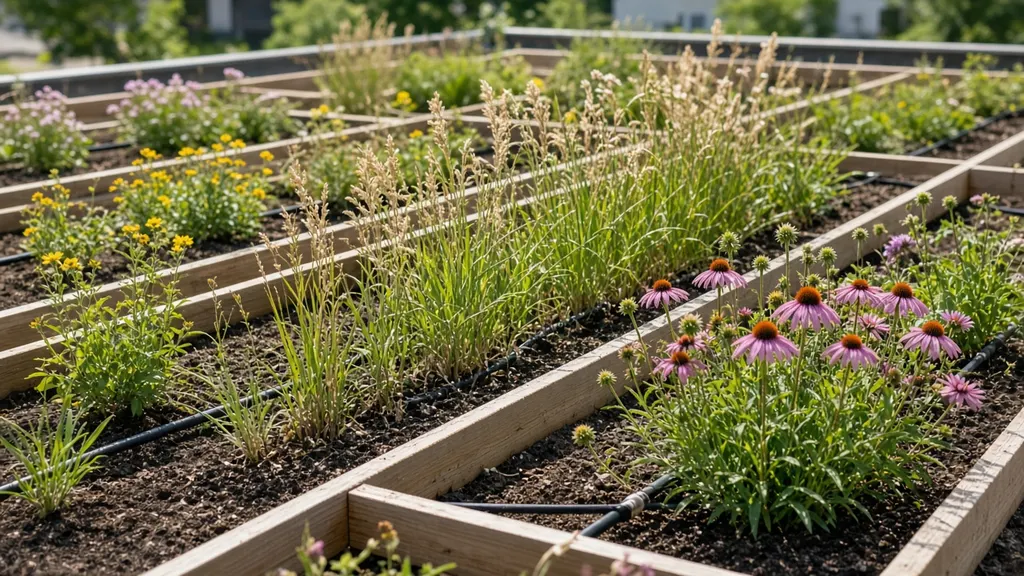
Prairie plantings can be established from seed, from small plants called plugs, or from a mix. Each has trade-offs.
| Method | Good for | Trade-offs |
|---|---|---|
| Seed | Large areas, low budgets, a natural look | Slow to establish, weeds in the first years, less control over pattern |
| Plugs | Smaller, visible areas, defined patterns | Higher cost, more labor to plant, faster and more predictable |
| Mixed | Seeded matrix with plugs in key spots | Balances cost and control; needs careful timing |
In studio, I usually propose seeded areas for large, low-visibility spaces and plugs near entries or walks where people need to see a finished look sooner. One of my test plot projects explored this comparison directly.
Maintenance is part of the design
Prairie-inspired plantings are often described as low-maintenance. That is true only after establishment, and only if the maintenance plan is realistic. The first two to three years matter most.
Year one
Mow or cut seeded areas high a few times to keep annual weeds from shading out seedlings; water plugs during dry spells.
Year two
Spot-weed, replace failed plugs, and begin to see perennials flower.
Year three and beyond
Cut back once a year in late winter or early spring, spot-weed, and adjust as the community settles.
Designers should write maintenance into the plan with the same care as the planting itself. A design that needs a skilled crew every week will not survive in a park department with a tight budget.
Where prairie design fits in Lincoln
Prairie-inspired plantings work well on campuses, in parks, along trails, in stormwater features and in the margins of parking lots and roads. They are less suited to tiny urban spaces where people need clear sight lines, or to places where formal character is part of the identity.
What I find most exciting is how prairie connects design to place. A planting that draws on the region's native plant communities tells people where they are. It supports pollinators and birds, handles the climate and changes visibly through the year — fresh green in spring, color in summer, bronze and gold in fall, and structure under snow.
Learning from remnants and restorations
The best way to understand prairie as a design reference is to spend time in it. Around eastern Nebraska there are prairie remnants and restorations open to visitors, and each one is a lesson in structure, seasonality and scale. I try to visit the same places in spring, midsummer, fall and winter.
What stands out each time is how much happens below eye level in spring, how tall and dense the grasses become by late summer, and how the whole community changes color through fall. In winter the structure remains: seed heads, bleached grasses and the occasional dark silhouette of a dried flower stalk. None of that comes through in a plant list.
During visits I note:
- Which species dominate different parts of the site, and how that relates to slope, moisture and soil.
- How plants mix: grasses forming a matrix, flowering plants scattered through it, and few gaps.
- Heights and textures at different times of year.
- What a typical square meter contains, which helps when estimating density in a design.
Translating prairie into urban sites
A remnant prairie is shaped by fire, grazing and centuries of competition. An urban planting has none of that and much more disturbance. Translation is required.
In practice that means a few adjustments:
- Simplify the palette for small and highly visible sites, using fewer species in larger drifts so the design reads clearly.
- Choose shorter and tidier species near walks, entries and parking, where tall, floppy plants can feel neglected.
- Replace fire with maintenance — usually a late-winter cutback and occasional editing.
- Frame the planting with mown edges, low walls or paving so it reads as cared for.
- Plan for establishment, because the first two or three years look different from the mature planting.
These adjustments do not dilute the idea of prairie. They make it work where people live, walk and park, which is where most of us will actually see it.
A checklist for prairie-inspired plans
- The site conditions are described before plants are chosen.
- The plan has structure, seasonal theme and ground layers.
- There are flowers in spring, summer and fall.
- Cues to care — edges, repetition, seating — are designed in.
- The establishment method (seed, plugs or both) is explained.
- A realistic maintenance plan covers the first three years.
Prairie is the reason Lincoln's landscape looks the way it does, and it can be the reason our designed landscapes work. To see how I have applied these ideas, take a look at my projects, or read about rain gardens and bioswales, where prairie plants do some of the heaviest lifting.
Last updated
Keep reading
Keep reading
9 min
Plants & climate
Planting design for Lincoln's climate: heat, wind, cold and clayA student's working guide to designing plantings that survive eastern Nebraska — reading hardiness and heat, planning for wind and freeze-thaw, working with heavy soils and choosing plants by community rather than by catalog photo.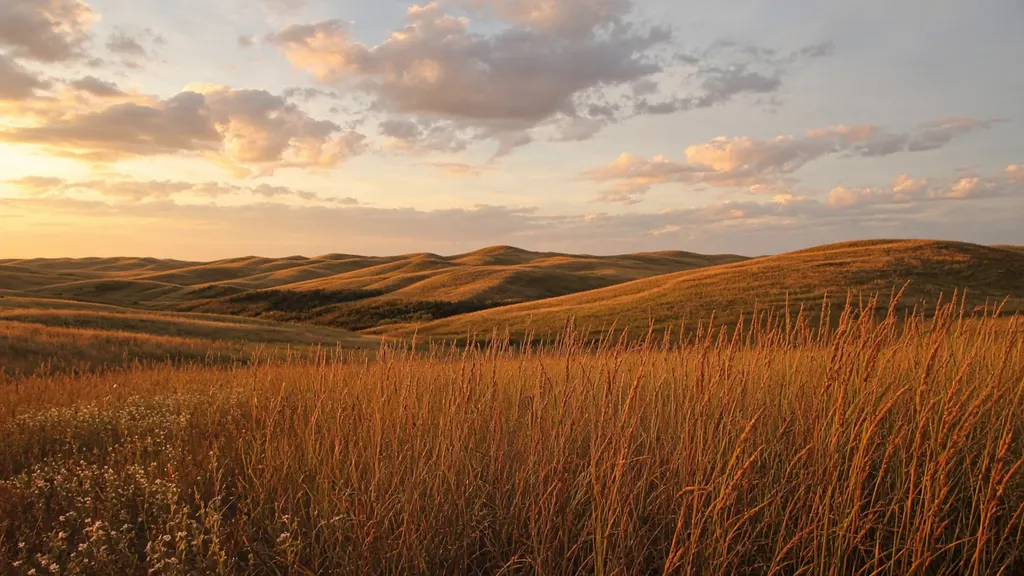
7 min
Public space
Designing public space for Nebraska wintersHow to design plazas, streets and small parks in Lincoln that stay useful and attractive from November to March: sun, wind shelter, snow storage, materials, lighting, planting and programming for cold months.
7 min
For students
Site analysis before you draw: how to read a site in LincolnA step-by-step approach to site analysis for landscape architecture students: what to observe, how to document sun, wind, water, soils, circulation and use, and how to turn notes into diagrams that shape a design.